
Three Best Martial Arts to Improve your Sanda Skills
Jan 13, 2026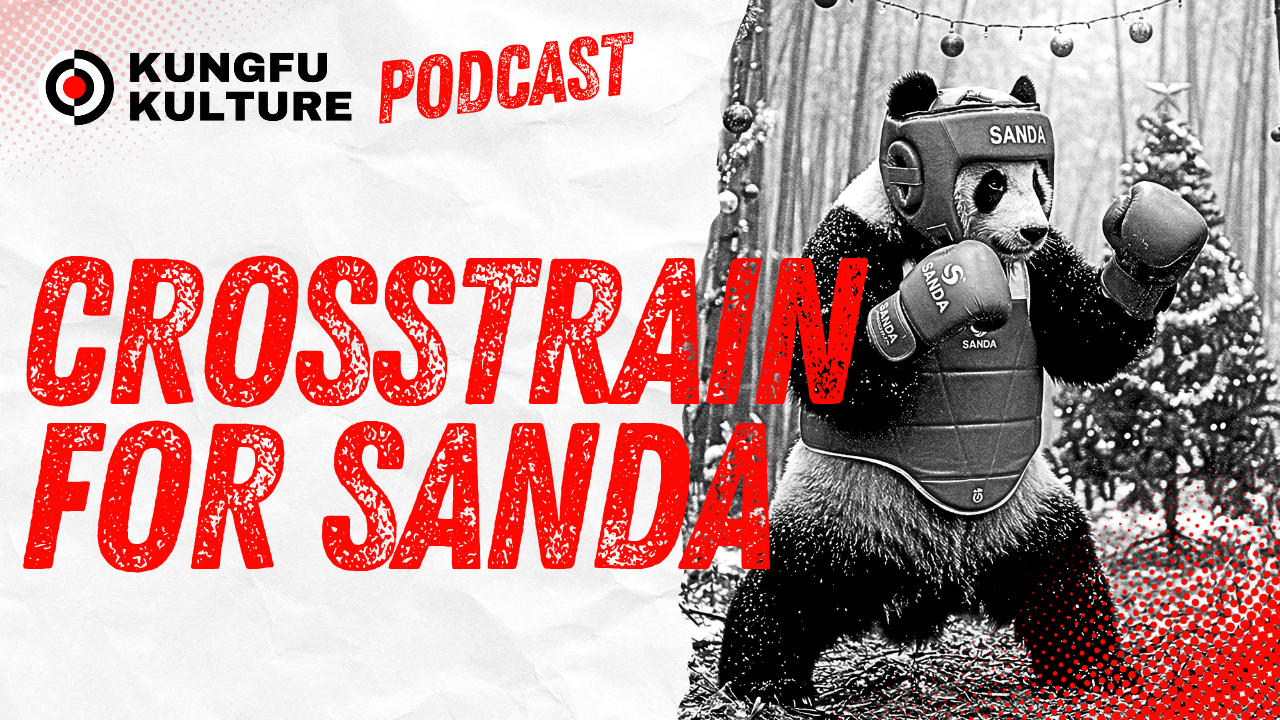
Sanda (Sanshou) is widely considered one of the most practical and well-rounded striking arts because it integrates striking with fast wrestling, (takedowns). However, like any martial art, it has specific meta-games and habits that can be improved by cross-training.
Here is a breakdown of the benefits of supplementing Sanda with Western Boxing, Professional Kickboxing, and Shuai Jiao.
1. Supplementing with Western Boxing
Sanda fighters are famous for their side kicks and takedowns, but their hand striking is often secondary to the kicking game. Boxing refines the most critical tools for setting up those takedowns.
* Superior Pocket Presence: Sanda fighters often strike to enter a clinch or strike to maintain distance. Boxing teaches you how to stay comfortably in "the pocket" (close range), slipping punches and looking for openings without immediately needing to clinch.
* Head Movement as Takedown Defense: Boxing head movement (slips, rolls, and pulls) is the ultimate defense against punches. In Sanda, slipping a punch is often the safest entry into a body lock or a double-leg takedown.
* Punch Mechanics & Volume: Boxers generally punch with better biomechanics and higher volume than pure Sanda athletes. Improving your jab and cross makes your entry for throws much harder to read.
* Angles of Attack: Boxing footwork teaches you to cut angles. Instead of moving purely linear (forward/backward) as is common in some Sanda styles, boxing helps you circle out, creating better leverage for hip throws.
2. Supplementing with Professional Kickboxing (K-1 / Dutch Style)
While Sanda has great kicks, Professional Kickboxing (often K-1 or Dutch style) offers a different philosophy on durability and combination striking that fills gaps in the Sanda game.
* Leg Kick Defense (Checking): Sanda fighters often stand in a bladed (side-on) stance to facilitate side kicks and catch incoming kicks. This leaves the lead leg vulnerable. Pro Kickboxing teaches you to "square up" and check heavy low kicks with your shin, rather than always trying to catch them (which can be risky against a heavy kicker).
* Sustained Combinations: Dutch Kickboxing is famous for 3-to-5 count combinations (e.g., Punch-Punch-Hook-Low Kick). Sanda tends to be "Single Shot" or "1-2" focused. Learning sustained combos forces your opponent to shell up, giving you a free entry for a throw.
* Conditioning and Durability: Pro Kickboxing training is notoriously grueling regarding shin conditioning and body hardening. Adding this toughness makes you harder to hurt on the Lei Tai (platform).
* Knee Strikes: Depending on the rule set, Sanda sometimes limits knee strikes or clinch fighting time. Muay Thai/K-1 rules allow you to refine the knee strike, which is a devastating weapon to use right before you execute a Sanda throw.
3. Supplementing with Shuaijiao (Traditional Chinese Wrestling)
Shuaijiao is the ancestor of Sanda’s throwing techniques. While Sanda focuses on the "fast throw" (throwing within 2-3 seconds), Shuaijiao focuses on the physics and leverage of the throw.
* Refining the Mechanics: In Sanda, you often muscle through throws using speed and explosiveness. Shuaijiao slows this down and teaches you the precise leverage points, making your throws effortless and less energy-intensive.
* Jacket/Clothing Skills: If you are training Sanda in a gi or competing in rules that allow holding clothing, Shuaijiao is essential. It teaches grip fighting (gripping the sleeves/collar) to off-balance opponents that Sanda (which uses boxing gloves) sometimes neglects.
* "Rooting" and Balance: Shuaijiao practitioners are masters of "Rooting"—the ability to lower your center of gravity so you cannot be thrown. This makes you nearly immovable when a Sanda opponent tries to sweep you.
* Follow-Through: Shuaijiao emphasizes throwing the opponent hard into the ground (or off the platform). It improves the "finish" of your takedowns, ensuring the opponent actually falls rather than just stumbling.
Summary of Synergy
* Boxing gets you inside safely without eating punches.
* Kickboxing conditions your body and teaches you to overwhelm the opponent with combos.
* Shuaijiao ensures that once you get a hold of them, they are going down efficiently.
Important Guidelines for Cross-Training
* Don't "Become" the Style: When you go to boxing class, do not become a pure boxer. If you start bobbing and weaving excessively, you are building bad habits for Sanda (where you will get kicked in the face). Use the boxing class to sharpen your hands, but keep your Sanda stance in mind.
* Watch Your Knees: Training Sanda + Shuaijiao + Kickboxing is very taxing on the knees due to the constant pivoting and wrestling. Ensure your Saturday recovery includes foam rolling the IT bands and quads.
* The "2-Second Rule": In Sanda, if you clinch for more than ~2-3 seconds without throwing, the ref breaks you. In Shuaijiao, you can grip fight for longer. When training Shuai Jiao, force yourself to execute throws immediately upon contact to keep your Sanda speed. Also, practice Shuaijiao without the jacket often to ensure that you can execute the takedowns in a Sanda match.
Stay connected with news and updates!
Join our mailing list to receive the latest news and updates from our team.
Don't worry, your information will not be shared.
We hate SPAM. We will never sell your information, for any reason.
