
The Shuai Jiao World Championships, International Glory, and the Fight to Grow Chinese Wrestling
Oct 20, 2026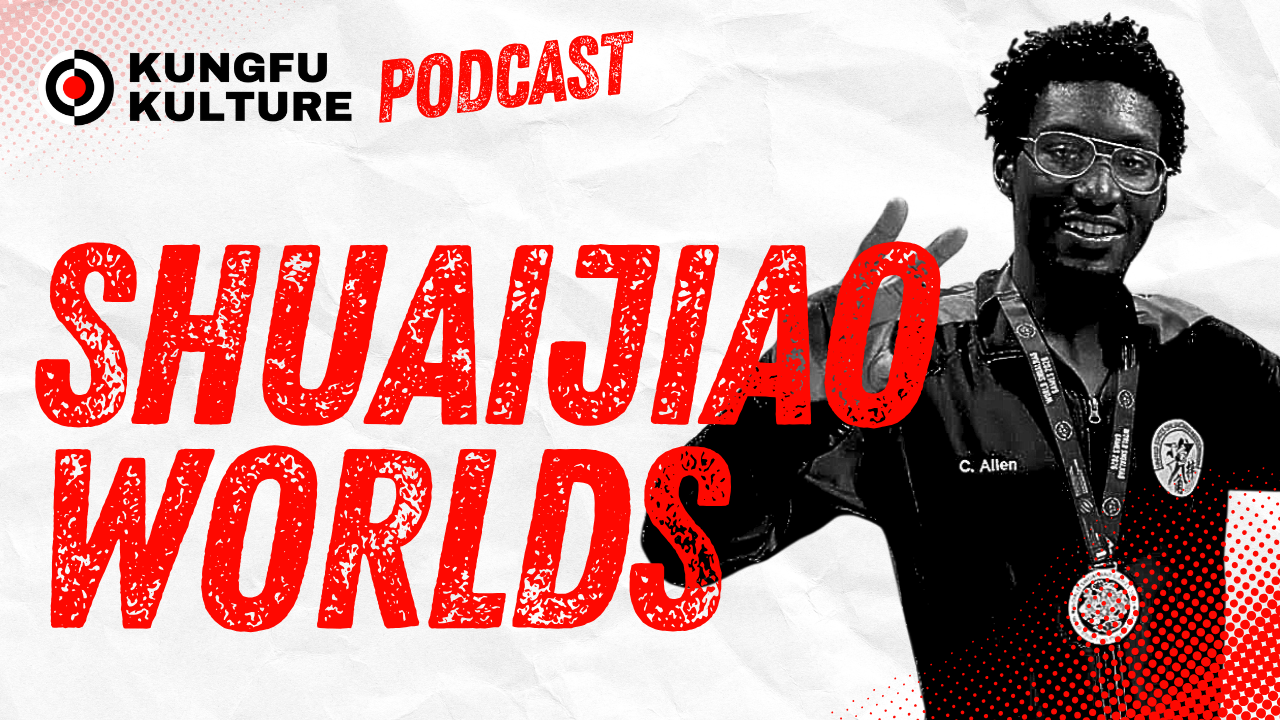
When combat sports fans think of jacket wrestling, Judo, Brazilian Jiu-Jitsu, or Sambo usually come to mind. Yet one of the world's oldest and most dynamic grappling traditions is Shuai Jiao (traditional Chinese wrestling).
In this episode of the Kung Fu Kulture Podcast, host Raul sits down with Team USA competitor and bronze medalist Caillou Allen to break down the recent World Shuai Jiao Championship held in Italy. Together, they dive into the tournament's standout moments, international standings, and what it truly takes for traditional martial arts to thrive on the global stage.
Inside the World Shuai Jiao Championship
The championship brought together over 200 competitors representing more than 30 nations [06:03]. The global presence was broad and diverse, featuring athletes from across Europe, South America, Asia, and beyond [10:32].
Team Standings
1st Place: Italy [06:16]
2nd Place: United States [06:24]
3rd Place: France [06:24]
Team USA traveled with a formidable squad of roughly 25 to 30 athletes across youth and adult divisions [17:40], earning a second-place overall finish right behind the host nation. Curiously, despite Shuai Jiao originating in China, the Chinese delegation brought only around five competitors [09:23]—a stark contrast to prior events such as the 2024 Baoding championships, which fielded hundreds of domestic athletes [09:16].
The 82kg Grind: Caillou Allen’s Bronze Run
Competing in the stacked 82kg division against 18 athletes [06:54], Caillou faced an uphill battle. After dropping his second bout, he fell into the double-elimination repechage bracket [08:08]. With zero margin for error, he fought through three consecutive do-or-die matches against competitors hailing from Spain, Russia, India, Brazil, and the Netherlands to secure the bronze medal [08:08], [15:52].
How Shuai Jiao Works: Rules & Mechanics
For practitioners familiar with Olympic wrestling or modern Judo, Shuai Jiao stands out for its high-impact throws, fast pace, and open rule set [13:19].
The Match Structure: Bouts consist of two 3-minute rounds separated by a 30-second rest period [11:45].
Uniform (Dabuzi): Competitors wear a heavy, short-sleeved vest/jacket reversible in red or blue, matched with regulation trousers [14:56].
Scoring Throws:
3 Points: Executed when an opponent is cleanly thrown (e.g., a full 360-degree rotation or landing flat on their back) while the attacker remains standing [12:09].
1 Point: Awarded if the thrower falls to the ground alongside their opponent, or if an opponent is pushed out of bounds [12:28].
Leg Grabs Allowed: Unlike modern Olympic Judo, which banned leg grabs, Shuai Jiao freely incorporates leg grabs, ankle picks, and sweeps [13:19], [14:07]. However, grabbing the pants fabric directly is prohibited [14:13].
No Joint Locks or Ground Submissions: There are no chokes or joint locks (chin na); once someone hits the mat, action resets immediately [13:38].
Analysis: The Challenge of Growing Traditional Arts
Beyond tournament highlights, the conversation tackled two structural issues facing Shuai Jiao and Chinese martial arts today:
1. The Administrative "Black Hole" of Data and Results
Raul opened the podcast pointing out a widespread frustration in traditional martial arts organizations—both at the Shuai Jiao Worlds and the Pan-American Wushu Championships [00:35], [02:44]. In both events, finding verified brackets, live scoring, or official final results online was nearly impossible. Competitors often had to photograph the podium monitors on their phones just to prove they medaled [03:06].
If martial arts federations want sponsors, broad media appeal, and Olympic-caliber credibility, investing in professional digital infrastructure, live bracket tracking, and transparent post-event reporting is mandatory [03:49].
2. Grassroots Passion vs. Pop-Culture Breakthroughs
How does a niche discipline break into the mainstream? As Caillou noted, simply sanctioning regional tournaments isn't enough to attract beginners [19:21]. Growth happens through two main avenues:
Cultural visibility: In the same way Bruce Lee catapulted Wing Chun and recent Hollywood action choreography brought Filipino Kali/Eskrima into the spotlight, Shuai Jiao needs cinematic storytelling, compelling media, and creative athletes putting its dynamic throws on film [19:52].
Accessible coaching: Aspiring practitioners need clear pathways to find vetted gyms and certified instruction through bodies like the United States Shuai Chiao Association (USSA) [24:49].
Resources & How to Get Involved
Find a School or Tournament: Check out the US Shuai Chiao Association for nationwide affiliate schools and national team qualifier tournaments like the annual Great Lakes Kung Fu Championship in Cleveland, Ohio [23:41], [24:49].
Follow Caillou Allen: Keep up with his training, horse stance conditioning, and tournament dates on Instagram at @IAmAfroZulu or on Facebook under Caillou Allen [25:52].
Stay connected with news and updates!
Join our mailing list to receive the latest news and updates from our team.
Don't worry, your information will not be shared.
We hate SPAM. We will never sell your information, for any reason.
